How to Plan a Wedding Step by Step for Arizona Couples
So, you're engaged! Congratulations! It's one of the most exciting times in your life, but that initial rush of joy can quickly be followed by the slightly terrifying question: "Now what?"
Planning a wedding essentially comes down to three big stages: figuring out your vision and budget, hiring your dream team of vendors, and then locking in all the final details. If you tackle them in that order, you’ll find the whole process moves from overwhelming to organized, letting you actually enjoy the journey to your wedding day.
Starting Your Wedding Planning Journey
This isn't just another generic checklist. We've designed this roadmap specifically for couples planning their big day right here in Phoenix, Scottsdale, and across Arizona. Let's walk through it together, step-by-step, to make sure your planning is as fun and memorable as the celebration itself.
Think of it like this:
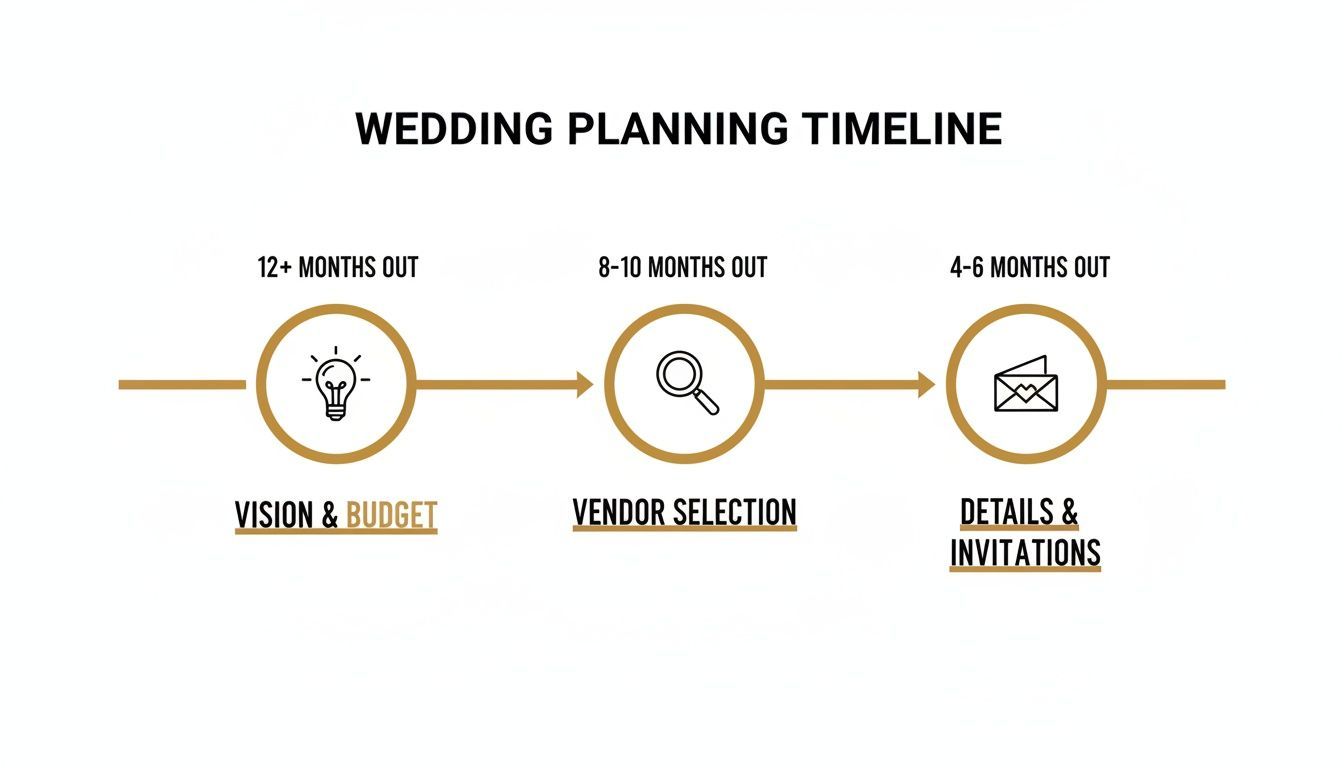
When you nail down the foundational decisions first, everything else—from picking a photographer to choosing your menu—just falls into place so much more easily.
First Things First: Just Breathe and Enjoy It
Before you even think about opening a spreadsheet or scheduling a venue tour, pause. Seriously. Take a moment. The first few weeks after getting engaged are so precious, and you can't get that time back.
Celebrate with your partner, pop some bubbly, and share your happy news with the people you love most. If you jump straight into planning mode, you risk burning out before you’ve even booked a single vendor.
This is your time to dream. Grab a coffee (or a cocktail) with your fiancé and just talk about what you both really want your wedding day to feel like.
- What's the vibe? Are you picturing a black-tie ballroom bash or something more like a relaxed, intimate backyard party?
- What matters most? If you had to pick your top three must-haves, what would they be? Maybe it’s incredible food, a killer live band, or a photographer who captures every candid moment.
- How do you want your guests to remember it? Think about their experience from start to finish.
The most important thing you can do right now is get on the same page about your vision and priorities. This shared foundation will be your North Star for every decision that follows, making the entire process feel more intentional and a lot less stressful.
Navigating Family, Traditions, and Two Worlds Coming Together
For many of our couples, especially those from different cultural backgrounds, wedding planning is a beautiful dance of blending traditions and balancing family expectations. It's so important to have these conversations early.
Talk about which rituals, foods, or special attire you both want to weave into your day. Having these chats upfront helps make sure everyone feels seen and honored, and it allows you to create a celebration that truly reflects who you are as a couple.
For a little more guidance on this, our post on event planning tips has some great advice.
Getting this clarity from the start not only prevents potential misunderstandings down the road but also makes it way easier to find vendors who understand and can bring your unique vision to life.
Building Your Foundation: Vision and Budget

Before you book a single vendor or even think about invitation designs, the real work begins. This is the foundational stage, usually kicking off 12 to 18 months out, and it’s all about figuring out your "why" and building a solid financial plan to make it happen.
This is the moment you and your partner shift from the "what ifs" to the "how-tos." It's about taking all those exciting, abstract ideas and shaping them into a concrete vision that will become your north star for every decision ahead. Getting this clarity early on is probably the single best thing you can do for yourselves.
Define Your Wedding Vision Together
Your wedding vision is so much more than a color palette or a theme—it’s the heart and soul of your celebration. The best place to start is by asking yourselves how you want the day to feel. Do you picture an elegant, black-tie affair in a Scottsdale ballroom? Or is it more of an intimate, bohemian gathering under the vast Arizona desert sky?
Now, it’s time to get specific about what truly matters. Sit down together and have each of you list your top three non-negotiables.
- Maybe for you, it’s: An incredible live band that will keep everyone on the dance floor all night long.
- And for your partner, it’s: A photographer who’s a master at capturing those candid, emotional moments.
- A shared priority might be: Exceptional, locally sourced food that reflects your love for Arizona's culinary scene.
Laying these priorities out on the table helps you instantly see where you're aligned and where you might need to find a happy medium. This isn't just about pinning things to a mood board; it’s about building a shared purpose. Knowing what you both value most will help you navigate the endless choices without getting overwhelmed. If you want to dig deeper into this, we have a whole guide on how to plan what truly matters.
Creating a Realistic Wedding Budget
With that vision crystal clear, you can now build a budget that actually supports it. This isn't just about landing on a total number; it's about strategically allocating your resources to the things you’ve already decided are most important. Starting with financial confidence is everything.
Honestly, this is the part of the process that intimidates most couples. Recent research shows that a staggering 57% of couples feel less than confident about managing their wedding finances. It’s no wonder so many end up overspending by 20-30%—it’s easy to do when you underestimate the costs of major categories. You can get more details on these wedding budget trends and learn how to sidestep those common pitfalls.
Think of your budget not as a restriction, but as a roadmap. It’s a tool that empowers you to spend intentionally on the things that will bring you the most joy, while confidently cutting back on what’s less important to your vision.
Sample Wedding Budget Allocation for a $40,000 Arizona Wedding
To help you get started, here’s a foundational budget breakdown. Think of this as a starting point to guide your initial financial planning and conversations with vendors.
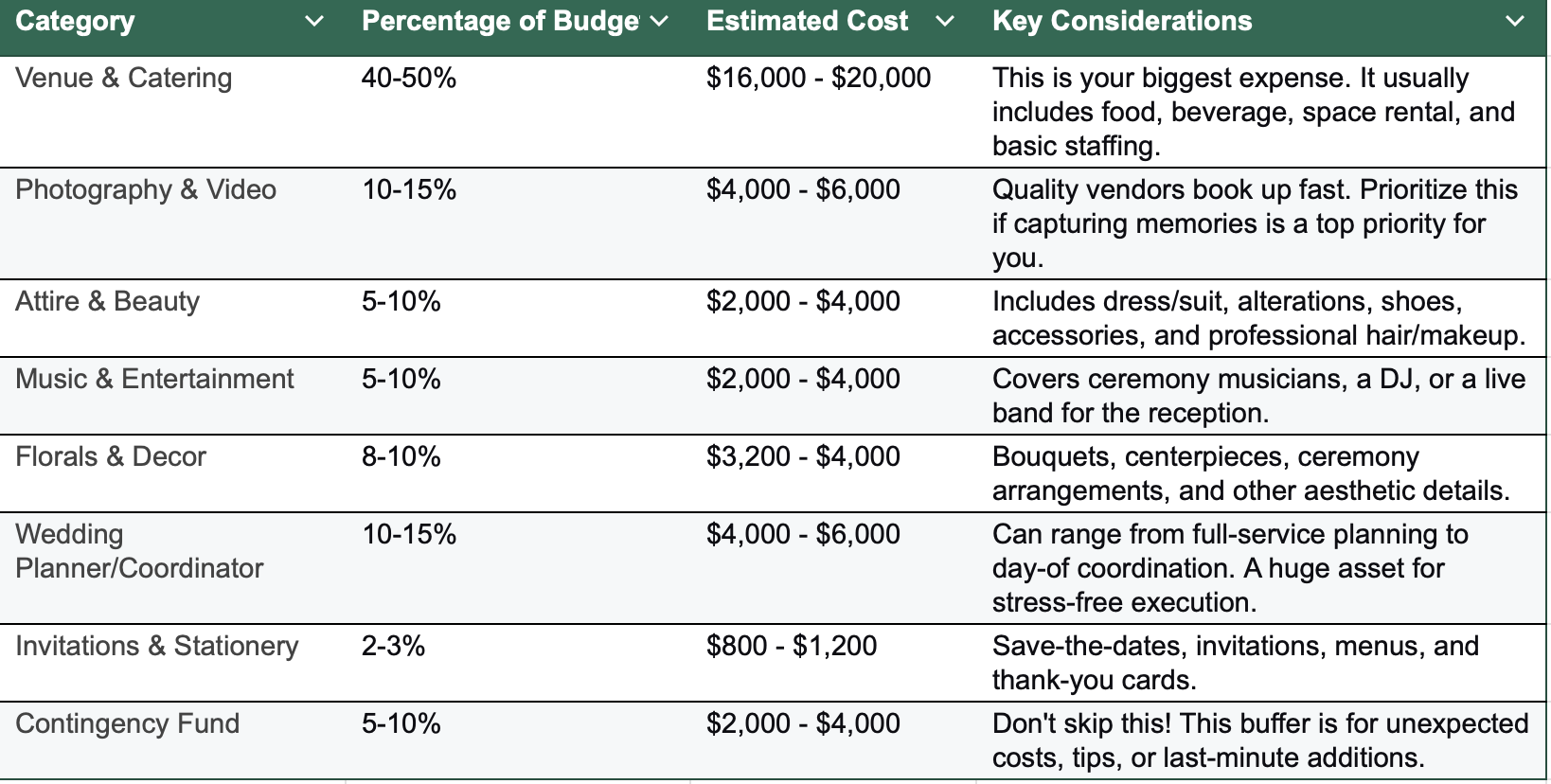
Remember, these percentages are flexible. If you’ve splurged on that amazing band you both wanted, you might pull back a bit on florals or stationery to balance things out.
Allocating Funds for a Multicultural Celebration
For multicultural couples, budgeting requires another layer of thoughtful planning. Your celebration is a beautiful blend of two families and two sets of traditions, and your budget needs to reflect that. It’s so important to account for specific cultural elements right from the very beginning.
Think about some of these potential expenses early on:
- Specialized Catering: You might need a caterer who’s an expert in Nigerian jollof rice or can prepare traditional Mexican dishes for a portion of the meal, which can affect the final cost.
- Traditional Attire: Factor in the cost of multiple outfits. This could be a Kente cloth ensemble for a Ghanaian ceremony or a Sari for an Indian reception, in addition to a Western-style gown or suit.
- Unique Entertainment: This is a wonderful way to honor your heritage, whether it's hiring an Afrobeats DJ, a Mariachi band, or traditional dancers.
- Ceremony Rituals: You’ll want to budget for any items needed for specific rituals, like the elements for a tea ceremony or a custom-designed set for a unity sand ceremony.
Discussing these elements upfront ensures they are woven seamlessly into your day instead of feeling like last-minute add-ons. By allocating funds for these priorities from the start, you can fully honor your heritage without sacrificing your financial peace of mind. This proactive approach is the key to creating a multicultural wedding that feels authentic, meaningful, and true to who you are as a couple.
Assembling Your Dream Vendor Team

Now that your vision and budget are taking shape, we get to the fun part—building the crew of professionals who will bring it all to life. This is where your wedding really starts to feel real! Typically, around the 9-12 month mark, you'll dive into the search for the photographers, florists, caterers, and musicians who will create the entire vibe of your day.
Think of your vendors as your creative partners. The right team won’t just show up and do a job; they’ll get what you’re going for, add their own expertise to make it even better, and handle all the behind-the-scenes details so you can actually enjoy yourself. In a competitive market like Phoenix and Scottsdale, finding people you genuinely click with is everything.
Finding Vendors That Align with Your Style
Every vendor search should start and end with your core vision. If you’re dreaming of a sleek, modern wedding, you'll want a photographer whose portfolio is sharp and editorial, not someone who specializes in rustic, sun-drenched shots. If amazing food is your non-negotiable, you’ll look for a caterer known for their creative, restaurant-quality menus.
It’s time to start building a shortlist. Here’s where to look:
- Your Planner's Little Black Book: An experienced Phoenix wedding planner keeps a curated list of trusted, vetted pros for every style and budget imaginable. This is, hands down, the fastest way to find reliable vendors.
- Venue Recommendations: Most Arizona venues have a list of preferred vendors who know the space like the back of their hand. This is a solid starting point, since they’re already experts on the venue's rules, layout, and lighting.
- Social Media Deep Dives: Use Instagram and Pinterest to your advantage. Searching hashtags like
#azweddingphotographeror#phoenixfloristis a brilliant way to visually vet a vendor’s style and see their most recent work in real-time.
Don’t just scroll through their greatest hits on Instagram. Ask to see a few full wedding galleries or read their blog posts. This shows you how they capture an entire event, from the chaotic getting-ready moments to the packed dance floor—not just the picture-perfect portraits.
Vetting Vendors for Multicultural Weddings
For multicultural couples, finding the right vendors is about so much more than just aesthetics. You need to find partners who have cultural competence and are genuinely excited about your traditions. This is a make-or-break step in making your celebration feel authentic, respectful, and uniquely you.
When you're blending heritages—say, a vibrant West African and American celebration—you need a team that "gets it." That means you have to ask direct, specific questions during your initial calls.
- For Caterers: Ask, "Have you ever prepared jollof rice or other traditional Nigerian dishes?" or "How do you feel about working alongside an outside caterer if we want to bring in specific cultural foods?" Their answer will reveal a lot about their flexibility.
- For DJs/Musicians: Get into the specifics of their music library. A great question is, "Can you seamlessly mix Afrobeats, Highlife, and contemporary Top 40?" A DJ who understands the flow of a multicultural party is worth their weight in gold.
- For Photographers/Videographers: Ask to see full galleries from weddings with similar cultural elements. You need to know if they’ll recognize the key moments of a Chinese tea ceremony or how to capture the incredible energy of a Hora.
Finding vendors who are not just experienced but genuinely curious and enthusiastic about your traditions will make the whole process smoother and your wedding day infinitely more meaningful.
The Importance of Contracts and Clear Communication
Once you've found a vendor you absolutely love, the final step before making it official is the contract. This document is your safety net. It protects both you and the vendor by laying out every single detail and expectation in black and white.
Never, ever sign a contract without reading it from top to bottom. Here’s what to look for:
- Scope of Services: The contract should list exactly what you’re paying for. For a photographer, this means the hours of coverage and number of shooters. For a florist, it's a specific list of every single bouquet, boutonnière, and centerpiece.
- Payment Schedule: It will clearly outline the total cost, the non-refundable deposit (or "retainer"), and the due dates for all your other payments.
- Cancellation and Postponement Policies: In today's world, this is critical. Understand the terms for what happens if you need to postpone or, in a worst-case scenario, cancel.
- Contingency Plans: What’s their plan B? A true professional will always have a backup plan for illness, equipment failure, or any other unexpected issue.
Clear communication is just as important as the contract itself. Your vendors should be responsive, organized, and proactive. A pro who communicates well from day one is a sign of a professional who will deliver an amazing experience when it matters most.
Designing the Details and Guest Experience
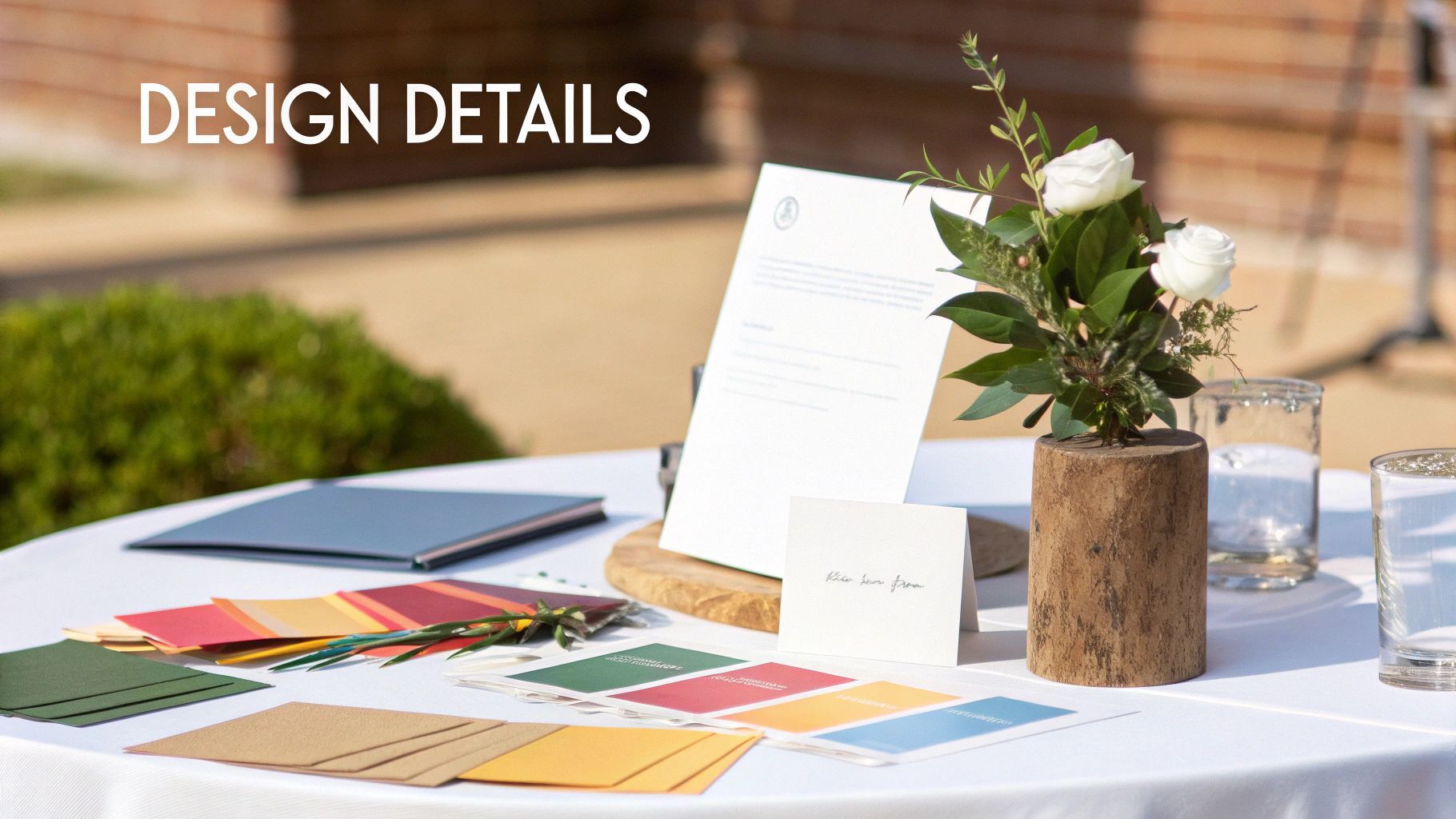
Okay, now for the fun part! With your dream team of vendors locked in, you’re diving into one of the most creative and exciting stages of wedding planning. This is when your celebration’s unique personality really starts to take shape, typically around 6 to 9 months out from the big day.
It's time to translate that big-picture vision into the tangible, beautiful details that your guests will see, touch, and remember. This phase is all about the atmosphere and making sure your guests have an incredible time.
Crafting Your Wedding Aesthetic
Think of your wedding aesthetic as the visual story of your day. It’s the common thread tying everything together, from the save-the-dates to the reception centerpieces.
Go back to that mood board you created and start refining your color palette. Are you feeling the warm, earthy tones of the Arizona desert—terracotta, sage green, and dusty rose? Or maybe you’re envisioning a more classic and timeless palette of ivory, gold, and black.
Once your colors are set, you can get down to business with your florist and designer to bring the whole look to life. It's crucial to think about how these elements will work in your specific venue.
- Floral Design: Talk to your florist about which in-season flowers will best capture your style. Decide where you want to make the biggest impact—maybe it’s a breathtaking ceremony arch or lush, cascading arrangements on the head table.
- Lighting: Never, ever underestimate the power of good lighting. Uplighting can completely transform a ballroom, while string lights can cast a magical, romantic glow over an outdoor dinner under the stars.
- Linens and Rentals: The texture of your linens, the style of your chairs, even the flatware you choose—these details all contribute to the overall feeling. They're what elevate a space from simply decorated to thoughtfully designed.
Your aesthetic should be a true reflection of you as a couple. Don't feel pressured to chase trends. The most memorable weddings I've seen are the ones that feel personal, authentic, and completely unique to the people they're celebrating.
Setting the Tone with Stationery
Your wedding stationery is your guests' very first glimpse into your celebration, so it’s your chance to make a fantastic first impression. The design itself—from the font to the paper texture—should feel like a natural extension of your overall aesthetic.
You'll want to get your save-the-dates in the mail around the 6 to 8 month mark. This is especially important for Arizona destination weddings, as it gives out-of-town guests plenty of time to book flights and hotels. Soon after, you'll start designing the formal invitation suite.
This is also a wonderful opportunity to weave in cultural elements. For multicultural weddings, think about incorporating traditional patterns, motifs, or even bilingual text. We’ve seen couples use beautiful Adinkra symbols from Ghana on their invitation liners or intricate henna-inspired patterns for an Indian-American celebration. It's a subtle yet powerful way to honor your heritage.
Ensuring a Seamless Guest Experience
A truly great wedding isn't just beautiful—it's also planned with your guests' experience in mind. Making things smooth and comfortable for your loved ones is one of the best gifts you can give them. Now is the time to iron out these logistical details.
First up, get your wedding website live. This will be the central hub for all important information.
- Share Key Details: Post the date, time, and addresses for the ceremony and reception. A clear timeline of events is always helpful.
- Provide Accommodation Info: If you've arranged a hotel block, share the booking link and cutoff date. It's also nice to suggest a few other local options at different price points.
- Offer Transportation Logistics: Detail any shuttles you're providing. If guests are driving, give clear directions and parking info.
- Create an FAQ Page: This is the perfect spot to answer common questions about dress code, plus-ones, or if the event is kid-friendly.
Arranging accommodations and transport is absolutely vital here in Arizona, where so many couples host destination weddings.
A well-organized plan shows your guests you care and makes their entire experience stress-free. For a beautiful example of how these details come together, you can explore the story of a stunning multicultural wedding at the Arizona Grand Resort & Spa.
Thinking through these logistics is what separates a good event from a truly great one.
Nailing Down the Final Logistics and Timeline
With all the big decisions in the rearview mirror, the last one to three months are all about finessing the details. You're shifting from painting with broad strokes to using the finest-point brush, turning your vision into a perfectly executed event. Now's the time to create the master document that will run the whole show: your day-of timeline.
Think of this timeline as the script for your wedding day. It’s more than just a schedule; it dictates the flow of every single moment, from the first makeup brushstroke to your final, grand exit as a married couple. A solid timeline is what allows every vendor to hit their mark, every transition to feel effortless, and, most importantly, allows you to be fully present instead of playing traffic cop.
Crafting a Flawless Day-Of Timeline
The easiest way to start is by working backward from your ceremony. Let's say it's at 4:00 PM. When do you need to be tucked away so early guests don't see you? That one anchor point helps frame the entire pre-ceremony block of time.
From there, start plugging in the other key moments, giving each a specific time slot and a realistic duration. And trust me on this one: add buffer time everywhere. Hair and makeup always runs a little late.
- Vendor Arrivals: Pinpoint the exact time your photographer, florist, DJ, and catering team need to be on-site to start their setup.
- Getting Ready: Block out dedicated time for hair, makeup, and slipping into your outfits. This is also when you'll get those incredible, candid photos with your wedding party, so don't rush it.
- First Look & Portraits: If you're doing a first look, give it at least 30-45 minutes. It's such a special moment. Follow it immediately with wedding party and family portraits to get them done before the "I dos."
- Ceremony to Reception Flow: Map out everything in between. How long does it take to get from the ceremony to the reception? How long is cocktail hour? When do guests need to be seated for your grand entrance?
Your timeline is your insurance policy against chaos. Seriously. When you map everything out this meticulously, you're empowering your planner and vendors to run the show, freeing you and your partner up to just enjoy the day you worked so hard to create.
Confirming Your Final Numbers
This is a huge one. In these last few weeks, you have to lock in your final guest count. Your caterer and venue need this number, usually about two to three weeks out, to finalize everything from food orders and staffing levels to the final floor plan.
That final number has a direct impact on your budget, so getting it right is key. It also kicks off the task everyone loves to hate: the seating chart. As you start arranging tables, think about the dynamics. Who will have a great conversation? Which family members need a little space? A thoughtful seating chart really makes a difference in your guests' experience.
Managing Final Vendor Details
Once your timeline is set and you have that final guest count, it's time for one last round of check-ins with your entire vendor team. This is your opportunity to tie up every last loose end and make sure everyone is on the same page.
- Finalize Playlists: Get your "must-play" and "do-not-play" lists over to your DJ or band. You'll also want to confirm the specific songs for big moments like the processional, your first dance, and the cake cutting.
- Confirm Vendor Meals: Don't forget to feed your hardworking team! Most vendor contracts will require a meal for anyone working through your reception. Check how many you need and let your caterer know.
- Schedule Final Payments: Get those final payments organized. A pro tip is to put each one in a clearly labeled envelope. You can then hand the whole stack to your planner or a trusted family member to distribute on the wedding day so you don't have to think about it.
- Transportation Schedules: Triple-check the pickup and drop-off times for any shuttles, limos, or your getaway car. Confirm all the locations, too.
The All-Important Marriage License
In the whirlwind of final planning, please don't forget the one detail that actually makes it all official! In Arizona, you have to get your marriage license in person, and you both have to be there. The good news is you can go to any county clerk's office in the state.
Just keep in mind that the license is only valid for 12 months from the date it's issued. I always suggest getting it a few weeks before the wedding—not too early, not too late. You’ll each need a valid photo ID (like a driver's license or passport) and you'll need to know your Social Security numbers. It’s the final, crucial piece of the puzzle that makes your beautifully planned celebration legally binding.
Enjoying Your Wedding Day and What Comes Next
After all those months of planning, your wedding day is finally here! The absolute most important thing you can do now is let go and just be in it. This is your moment.
To do that, you've got to hand over the reins. Delegate every single last-minute task to your wedding planner or a trusted friend you've designated as your point person. Your only job today is to be fully present with your new spouse. Soak it all in—the emotions, the incredible food you spent ages choosing, and the music. Dance until your feet hurt!
Amidst the joyful whirlwind, try to steal a few quiet moments just for the two of you. Step away from the crowd, breathe, and just look at each other. It all goes by in a flash, and those little pauses are what you'll remember most.
Managing the Day-Of Details
A little prep work before the big day will help you stay in that blissful bubble. Make sure your photographer has a short, simple list of your "must-have" photos. This way, you aren't spending the reception wondering if they got that perfect shot with your grandmother.
You hired a team of incredible professionals for a reason. Trust them. You did all the hard work vetting and choosing them, so empower them to do their jobs and bring your vision to life. You’re supposed to be the guest of honor, not the event manager.
This mindset is everything. Hand off the final payment envelopes to your planner, put your phone away, and focus on the magic happening all around you.
After the Celebration Ends
Believe it or not, the to-do list doesn't completely disappear when the last song plays. But tackling a few final tasks right away will let you transition smoothly into married life.
- Thank-You Notes: The golden rule is to get these in the mail within three months of the wedding.
- Final Payments & Returns: Double-check that all your amazing vendors have been paid in full. Don't forget to return any rented items, like linens or decor, to avoid extra charges.
- Preserve Your Attire: Get your wedding dress or suit professionally cleaned and preserved. It’s a beautiful keepsake you'll want to protect.
Getting these last few things checked off the list means you can officially close the wedding planning chapter and dive headfirst into your next big adventure together.
A Few Common Questions We Get All The Time
When you're diving into wedding planning, it's totally normal for a million questions to pop into your head. Let's tackle some of the ones we hear most often from our Arizona couples.
When Is The Right Time To Send Save-The-Dates And Invitations?
Timing is absolutely crucial, especially if you have guests flying in for your Arizona wedding. Think about it: you want to give them plenty of notice to snag good flights and book their stay.
As a solid rule of thumb, get those save-the-dates in the mail about 6 to 8 months before the wedding day. This heads-up is a huge help for everyone's planning.
Then, your formal invitations should go out 8 to 12 weeks beforehand. Don't forget to set that RSVP deadline for about a month out from the wedding—this gives you the breathing room you need to give final headcounts to your caterer and venue without scrambling.
Realistically, How Many Guests Will Say "No"?
This is the big question, isn't it? It directly impacts your budget and final guest list. From what we've seen over the years, you can generally expect about 15% to 20% of your invited guests to decline.
Keep in mind, that number can creep higher if you're planning a destination wedding or have your heart set on a holiday weekend. It’s a good number to have in your back pocket when you’re thinking about a "B" list or making sure you don't go over your venue's capacity.
A word of advice from experience: Please don't invite more people than your venue or budget can actually accommodate, banking on a certain number of declines. It's a gamble that can lead to some really tough, stressful conversations down the road. Always have a plan for a 100% "yes" rate, just in case.
Do We Really Need A Wedding Planner?
Okay, so a planner isn't technically a requirement, but I can honestly say it's often the single best investment a couple makes in their wedding. Their job is so much more than just making sure things run smoothly on the day itself. They're your guide, your advocate, and your sanity-saver through the entire process.
Here’s where they really shine:
- Vendor Connections: A great planner has a curated list of trusted local pros. They know who is reliable, who fits your style, and who will deliver.
- Budget Mastery: They are experts at knowing where your money will have the most impact and can often find ways to save you money that you'd never think of.
- Crisis Management: When a problem pops up (and something always does), your planner is the one who handles it calmly and professionally, often before you even know about it.
For weddings with a lot of moving parts—like multicultural celebrations with multiple events or large-scale luxury affairs—a planner becomes indispensable. They manage all the logistics, freeing you up to actually be present and soak in every moment of your engagement and wedding day.
At D'Flaire Weddings, our entire focus is on creating poised, purpose-driven celebrations with a sense of clarity and calm. If you're ready to plan your wedding with a team dedicated to protecting your time and honoring your vision, we'd love to connect. Learn more about our planning services and how we can bring your dream wedding to life.