Your Wedding Planning Timeline Template For a Stress-Free Day
A solid wedding planning timeline is your secret weapon for a stress-free celebration. It takes the entire overwhelming process and breaks it down into simple, manageable tasks month by month and week by week.
Think of it as your personal roadmap, guiding you from big-picture decisions like booking a venue all the way down to tiny details like finalizing your seating chart. It’s the one tool that guarantees nothing gets missed, keeping you organized, on budget, and surprisingly calm.
Building Your Stress-Free Wedding Blueprint
Let’s be honest, planning a wedding can feel like staring at a mountain of to-dos with no idea where to start. The secret to turning that chaos into calm, confident action is a structured plan.
A wedding planning timeline template isn't some rigid, one-size-fits-all checklist; it's a personalized guide that transforms a monumental task into a series of clear, achievable steps. It’s the single most important tool for building your confidence right from the get-go.
This is especially true if you’re a busy professional or planning a destination wedding in Arizona, where managing your time and coordinating from a distance are everything.
A well-crafted timeline makes sure you're making the right decisions at the right time, which helps you avoid that last-minute scramble that always leads to stress and going over budget.
Why a Timeline is Non-Negotiable
A timeline does so much more than just list tasks—it builds the entire framework for your wedding journey. Here’s how it helps:
- Secure Your Dream Team: The best venues and vendors in Scottsdale and Phoenix often get booked more than a year out. A timeline pushes you to lock in your top priorities early so you don’t miss out.
- Manage Your Budget: By spacing out vendor deposits and payments over several months, you can keep your cash flow in check and avoid any nasty financial surprises down the road.
- Actually Enjoy the Process: When you know exactly what’s coming next, you can focus on one phase at a time. This makes the whole experience feel more enjoyable and a lot less like a frantic race to the finish line. Our guide on essential event planning tips dives even deeper into mastering this process.
Recent wedding industry data really drives this point home. While the average couple takes about 15 months from engagement to wedding day, a whopping 52% kick off their detailed planning exactly 12 months out. This timeframe gives you plenty of breathing room for fun pre-wedding events like bridal showers (which 64% of couples have) and honeymoons (which 69% take).
With couples spending an average of six hours per week on planning—and 90% doing it digitally—a structured timeline is the only way to make that time truly count. You can dig into more of these stats in The Knot's 2025 Real Weddings Study.
A great timeline isn't about control; it's about confidence. It’s the tool that empowers you to delegate, make informed decisions, and ultimately, be fully present on your wedding day because you know every detail has been thoughtfully handled.
To give you a bird's-eye view of the road ahead, we've broken down the major planning phases. This overview will help you see the entire journey before we get into our detailed, downloadable templates.
Key Wedding Planning Phases At a Glance
This table provides a high-level overview of the major wedding planning stages and the primary goals for each, helping you understand the entire journey.
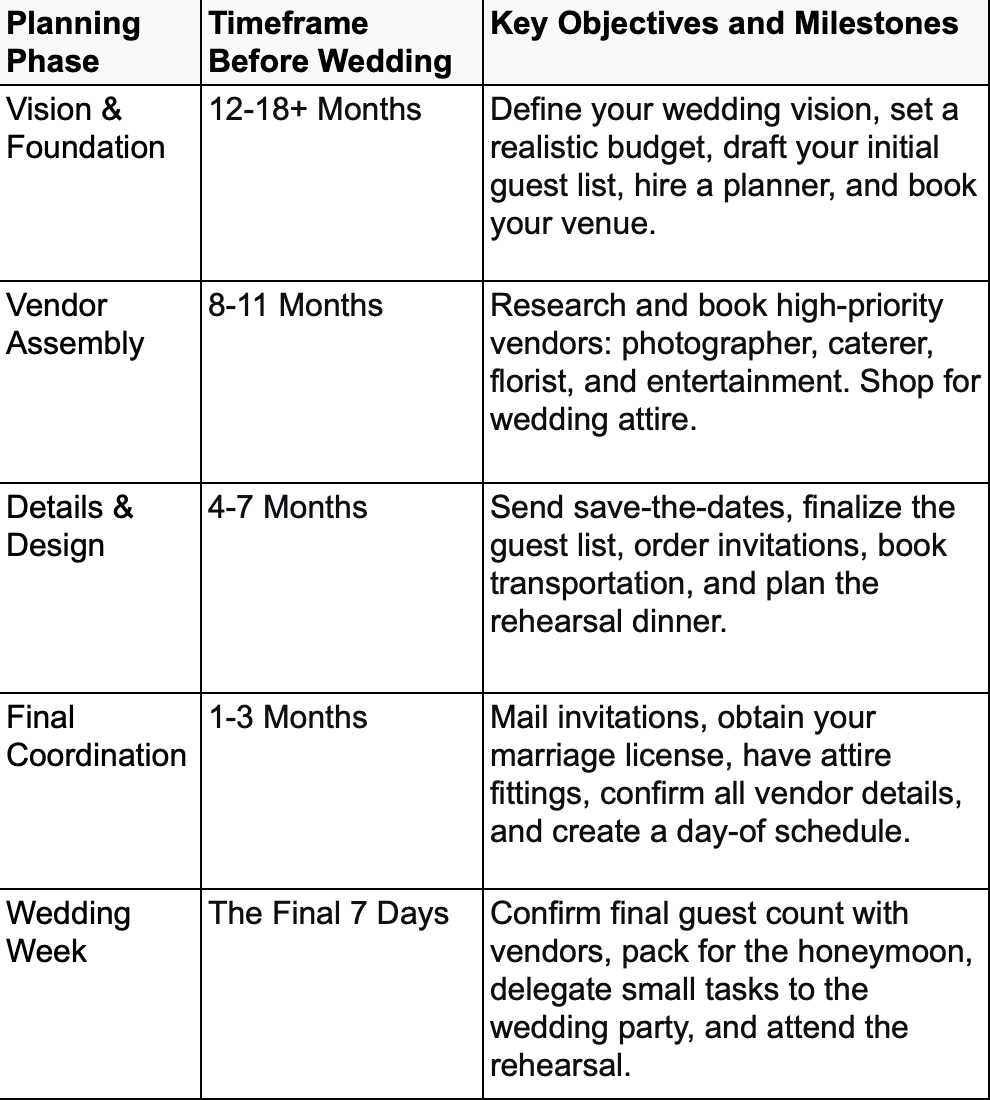
Seeing it all laid out like this makes the process feel much more approachable, doesn't it? Each phase builds on the last, creating a logical flow from your initial vision to your final send-off.
The Classic 12+ Month Wedding Planning Timeline
If you're looking at an engagement of around 12 to 18 months, you've hit the sweet spot. There's a reason this is the gold standard for wedding planning—it gives you the breathing room to thoughtfully choose your dream vendors, lock down a sought-after Phoenix or Scottsdale venue, and actually enjoy the process.
This isn't just about avoiding a last-minute scramble; it's about building a celebration that truly feels like you, without the unnecessary stress.
This visual gives you a bird's-eye view of the journey from "Yes!" to "I do."
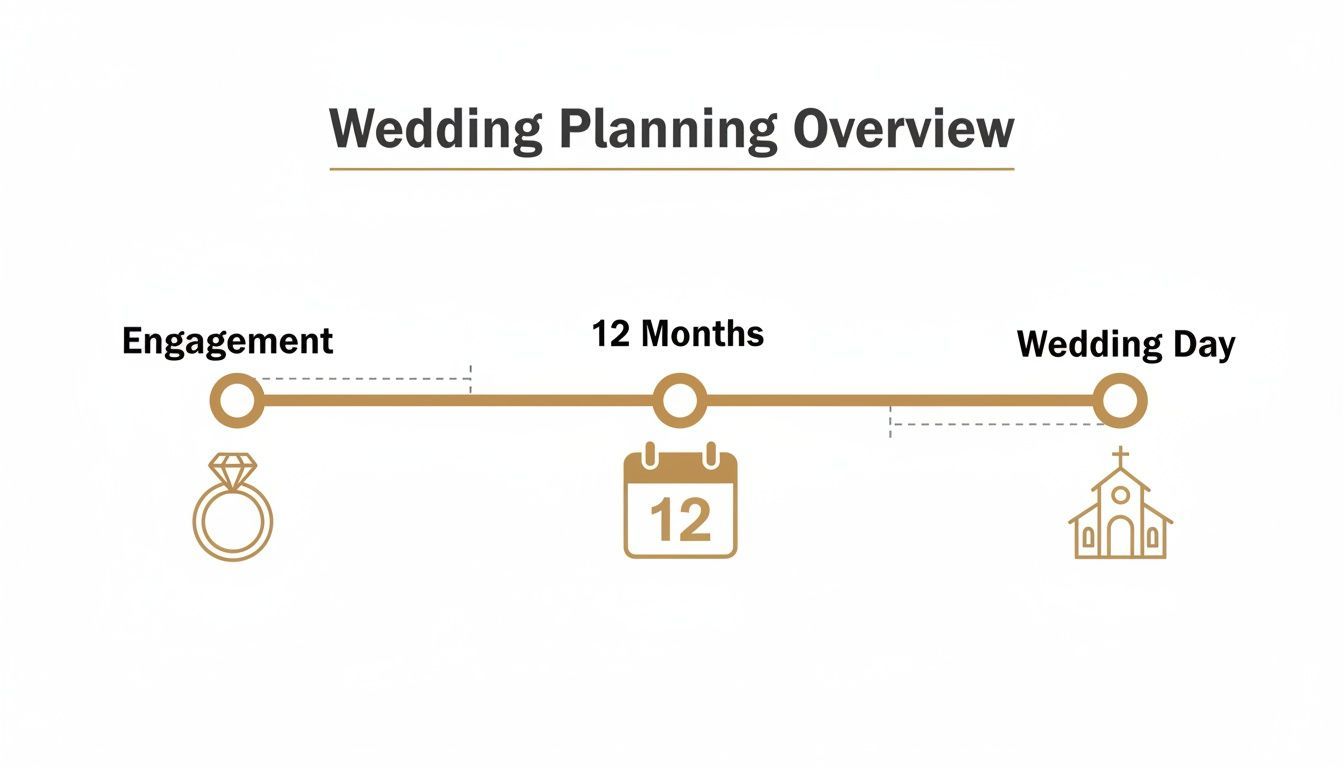
It maps out the key phases, showing how a year-long timeframe provides a solid foundation for bringing your vision to life. Let's break down what that really looks like.
The Foundational Months: First Steps (18-12 Months Out)
Once the initial engagement bliss settles in, the real work begins. The decisions you make right now will set the entire tone for your planning journey. Before you get lost in Pinterest boards and color palettes, sit down with your partner and get on the same page about your vision.
What are your absolute non-negotiables? Is it incredible food, a specific photographer whose style you love, or a live band that will have everyone on the dance floor all night? This is also the time to tackle two other massive pieces of the puzzle: your budget and your initial guest list.
These three elements—vision, budget, and guest count—are completely intertwined. You can’t book a venue without a rough idea of how many people you’re hosting or what you can realistically spend. This is also the perfect moment to hire a wedding planner. A seasoned pro can help you build a sensible budget, suggest venues that match your vibe, and connect you with trusted vendors—a massive head start. For a deeper dive, our guide on how to plan a wedding step-by-step walks you through these crucial first moves.
With these cornerstones in place, your top priority is to book your venue and lock in your wedding date. In a hot market like Arizona, the best spots get snapped up more than a year out.
Assembling Your Vendor Dream Team (11-8 Months Out)
With your venue secured, the momentum really starts to build. Now you get to focus on booking the creative partners who will bring your wedding day to life. These are the vendors who can only be in one place at a time, so they should be next on your list.
Here are the key players to book during this window:
- Photographer & Videographer: Their work will define how you remember your day for years to come. Take your time reviewing portfolios to find a team whose style truly speaks to you.
- Caterer: If your venue doesn't provide in-house catering, it's time to start exploring your options. The food and drink are a huge part of the guest experience.
- Florist & Designer: These are the pros who will shape the entire aesthetic and atmosphere of your celebration.
- Entertainment: Whether you envision a high-energy DJ or a classic live band, the right music is essential for setting the mood.
This is also the ideal time to start shopping for your wedding attire. A wedding gown or a custom suit can take months to be made and tailored, so starting the search early will save you a world of stress down the road.
Weaving in the Personal Touches (7-4 Months Out)
Now that your core vendor team is in place, you can shift your attention to the finer details and all the elements your guests will interact with. This phase is all about making the wedding feel uniquely yours.
"The move toward hyper-personalization is undeniable. We're seeing global searches for luxury wedding packages up 23% year-over-year, and for custom designs, it's a staggering 156% jump since 2023. This is exactly why a 12-14 month timeline remains the sweet spot for U.S. couples—it gives you the space to weave in those meaningful, personal touches without feeling rushed."
During these months, you'll send out save-the-dates, build your wedding website, and start designing your invitations. It’s also time to arrange hotel blocks for out-of-town guests and figure out transportation.
This longer timeline is especially a gift for couples planning multi-day events or incorporating specific cultural traditions, giving you ample time to blend everything together seamlessly. Around the six-month mark, you’ll get to the fun stuff like cake tastings, finalizing the menu with your caterer, and buying your wedding bands. These are the tasks that bring the sensory details of your day into focus, making everything feel wonderfully real.
What If You Have Less Than a Year to Plan?
Not everyone has the luxury of a long engagement, and that’s more than okay! Plenty of incredible weddings come together in six months or even less. The key isn't how much time you have, but how you use it.
When you're working with a condensed timeline, or planning a destination wedding from afar, your strategy has to shift. It’s all about being decisive, flexible, and tackling the tasks with the longest lead times first.
A shorter engagement doesn't mean sacrificing your vision. It just means you need a more focused game plan to bring it to life without the stress.
The Six-Month Sprint
Planning a wedding in six months is an absolute whirlwind, but it's completely doable. Your first 30 days are the most critical. You'll essentially be compressing the first three or four months of a standard timeline into one super-productive month.
The immediate goal? Lock in your "big-ticket" vendors—the non-negotiables that get booked up a year or more in advance. You'll need to make decisions quickly and with confidence. There won't be time to leisurely tour a dozen venues or interview five different photographers.
My advice is to do your research, narrow it down to your top two or three choices in each major category, and be ready to sign on the dotted line.
Vendor availability will be your biggest hurdle, so here are a few pro tips:
- Be Flexible with Your Date: If you’re open to a Friday or a Sunday, you’ll find that many in-demand venues and vendors suddenly have availability.
- Lean on a Planner: This is where a planner becomes your secret weapon. We have the connections to find out who’s available and fits your vision in a matter of hours, not weeks.
- Book in Batches: Try to book your venue, caterer, photographer, and officiant all within the same initial two-week period. This creates the entire foundation for your wedding, and everything else can be built around it.
Planning a Destination Wedding in Arizona
Destination weddings come with their own unique timeline challenges. You might have more time on the calendar, but the logistics of planning from another state require a different kind of schedule.
For destination weddings—which 24% of U.S. couples choose—an ideal planning window is about 9-12 months. This is especially true for popular luxury markets like Phoenix and Scottsdale. This timeframe gives you and your guests plenty of breathing room for travel arrangements.
Here’s what a typical destination wedding timeline looks like from my experience:
- 12-18 Months Out: Secure your dream venue and photographer. Over 90% of couples book these two vendors first, and for good reason.
- 9-12 Months Out: Finalize your caterer, florist, and entertainment.
- 6-9 Months Out: Lock in attire and beauty vendors.
- 3-6 Months Out: Handle the guest list and finer details.
This structured approach is essential when you're managing everything from a distance. You can dig into more destination wedding statistics and trends to see why this schedule is so effective.
For our out-of-state couples planning a Phoenix or Scottsdale wedding, we essentially become their local experts on the ground. We handle all the vendor communication, attend meetings on their behalf, and send video tours so the process feels personal and managed, not distant and overwhelming.
A well-paced timeline also allows you to schedule a planning visit or two without feeling frantic. You can time a trip to do your menu tasting, see a floral mockup, and have your hair and makeup trial all in one efficient, fun visit.
No matter your timeframe, the right wedding planning timeline template is one that bends and flexes to fit your life. Whether it’s a condensed 6-month plan or a logistically focused destination guide, the goal is always the same: create a clear, actionable path to your wedding day that feels exciting, not exhausting.
Planning for Multicultural and Multi-Day Weddings
A standard wedding planning checklist is a great place to start, but let's be honest—it can feel completely inadequate when you're planning a celebration that spans multiple days or blends rich cultural traditions.
Many of the most beautiful celebrations, like West African weddings, aren't just a single-day affair. They are a vibrant series of events, each with its own meaning, logistics, and unique flow. You might have a traditional engagement ceremony, a welcome party for guests who've traveled, the Western-style wedding day, and a farewell brunch. Trying to shoehorn all of that into a conventional timeline just doesn't cut it. It takes a much more layered and strategic approach to make sure every tradition is honored and nothing feels chaotic.
How to Build a Layered Timeline Framework
The secret to managing a multi-day wedding is to stop thinking of it as one big event. Instead, you're planning several interconnected events that all need to fit together perfectly.
I always recommend creating separate timelines for each core celebration that all roll up into one master schedule. This lets you manage different vendor teams, venue logistics, and guest communications for each part of the festivities without feeling like you're juggling a dozen things at once.
Think about it: the venue for a traditional Nigerian engagement ceremony is likely totally different from the ballroom you booked for your main wedding reception. That means you’re coordinating twosets of vendors, two distinct guest experiences, and two unique event flows. Your wedding planning timeline template has to be flexible enough to track these parallel planning streams at the same time.
This is where having a planner who truly understands the cultural nuances is a game-changer. They can anticipate the specific needs of each tradition—like sourcing special attire or making sure elders are properly accommodated—and build those requirements right into the schedule from the very beginning.
A Real-World Example: A Nigerian Wedding in Scottsdale
Let's walk through how this looks in practice. Picture a Nigerian wedding for 250 guests in Scottsdale, Arizona. The festivities are spread across a long weekend: a traditional Yoruba engagement ceremony on Thursday, a welcome dinner on Friday, the main wedding on Saturday, and a farewell brunch on Sunday.
Here’s a snapshot of how we’d structure the planning:
- 12+ Months Out: First things first, we’d lock in the two main venues—one for the Saturday wedding and another that’s right for the vibrant, interactive traditional ceremony. We’d also book the core vendors who will be there for multiple days, like the photographer and videographer, making sure their packages cover the extended schedule.
- 9-11 Months Out: Now we start booking the event-specific vendors. This means hiring a caterer who specializes in incredible West African cuisine for the traditional ceremony and a different team for the Western reception. We'd also book the MC (an absolutely essential role in Nigerian weddings), the DJ, and the decorator for both big events.
- 6-8 Months Out: This is when guest communication moves to the front burner. The save-the-dates need to clearly lay out the multi-day schedule so guests can book their travel and hotels. We’d also launch a detailed wedding website with the full itinerary, dress codes for each event, and helpful info on the cultural traditions they’ll be part of.
This layered approach is all about preventing that last-minute scramble. It guarantees each part of your celebration gets the focused attention it deserves.
Having a planner who understands the cultural significance of each event is non-negotiable. They know that the traditional engagement isn't just a 'pre-party'—it's a deeply meaningful ceremony with its own specific protocols, timeline, and vendor needs. Honoring that distinction is the key to a seamless and respectful celebration.
Sample Timeline for a Multi-Day West African Wedding
To give you a clearer picture, I've put together a sample timeline. This shows how you might sequence key planning tasks for a celebration that beautifully blends traditional West African and Western elements over several days.
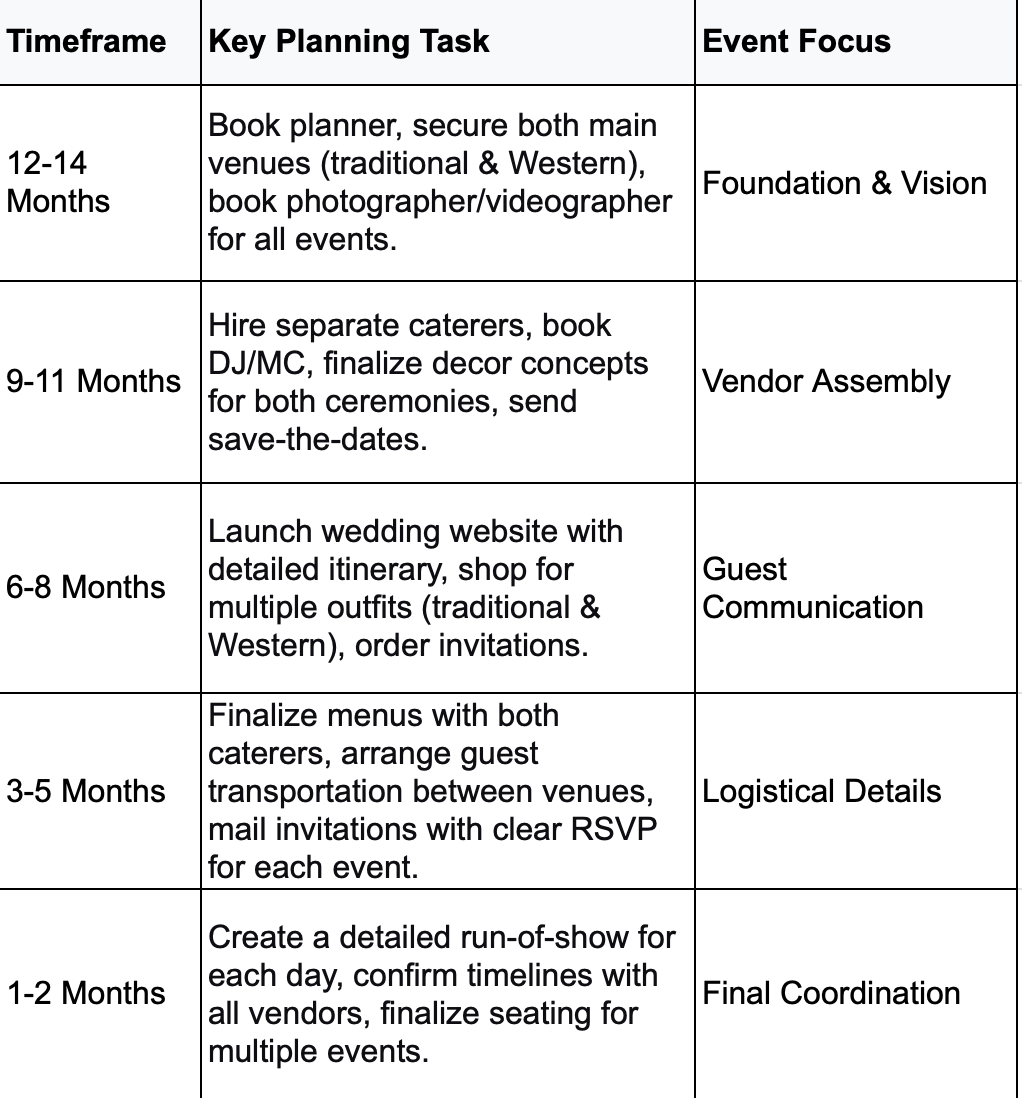
Ultimately, a successful multi-day wedding all comes down to a timeline that is flexible, detailed, and culturally aware. By breaking the planning into manageable pieces for each event and understanding what makes them unique, you can create a seamless, joyful celebration that honors every single part of your heritage.
Navigating The Final Month and Wedding Week
The final four weeks before your wedding are a whirlwind. This is when all the big-picture plans finally sharpen into focus and every little detail clicks into place. It’s the home stretch, a time filled with final confirmations, payments, and tying up loose ends.
The real goal here isn’t just to check boxes—it's to build such a solid plan for the wedding day that you can be completely present and soak it all in.
Having a detailed roadmap for this last month is your secret weapon against last-minute stress. From locking in your photography shot list to putting together welcome bags, every task is about creating a smooth, wonderful experience for you and your guests. This is the moment your wedding planning timeline template shifts from a long-term guide to your minute-by-minute playbook.
The Four-Week Countdown
With one month to go, your attention pivots from booking vendors to fine-tuning logistics with them. Now is the time to schedule that final venue walkthrough. You'll want your planner there, along with key players like the caterer and florist, to make sure everyone is aligned on the layout, power needs, and overall flow of the day.
You'll also be sending out a lot of final payments around this time, so keep that budget spreadsheet handy. It’s also the perfect moment to triple-check all the details—from the final song requests with your DJ to the exact cake delivery time with your baker.
Here are a few critical tasks for this period:
- Get Your Marriage License. The window for this is often surprisingly narrow. Check your local requirements and get it on the calendar so you don't scramble at the last minute.
- Have Your Final Attire Fitting. Remember to bring your wedding shoes and all your accessories to this appointment to guarantee the fit is absolutely perfect.
- Write Your Vows. If you're writing your own, carve out some quiet, dedicated time to reflect and put your feelings into words. It’s often harder than it looks!
Honestly, this period is all about clear and proactive communication. A quick confirmation email can prevent a world of headaches later on.
The final month is less about making big decisions and more about confirming the small ones. By creating a hyper-detailed 'run of show' and sharing it with everyone involved, you're not just planning an event; you're directing a beautiful, seamless production.
Crafting Your Day-Of Schedule
The single most important document you’ll put together in this final stretch is your wedding day timeline, what we in the industry call the "run of show." This isn't just a basic schedule; it's a minute-by-minute script for everyone involved, from the hair and makeup team to the groomsmen and the venue coordinator.
A truly great day-of schedule should account for everything:
- Morning Prep: A detailed hair and makeup schedule is non-negotiable. List out each person's start and end time to keep the morning moving along without a hitch.
- Vendor Arrivals: Note the exact arrival and setup times for every single vendor—florist, photographer, caterer, band, you name it.
- Key Moments: Pinpoint the times for the first look, ceremony processional, cocktail hour, grand entrance, first dance, cake cutting, and the final send-off.
- Photography Shot List: Hand your photographer a list of "must-have" family photos and wedding party combinations. This makes the formal portrait session fast, efficient, and painless for everyone.
This detailed schedule is your key to a relaxed, enjoyable wedding day. It empowers your planner and vendors to bring your vision to life perfectly while you get to focus on plan what truly matters without the pressure.
The Final Week Checklist
The last seven days are for final touches and a little self-care. It’s time to start delegating small tasks, packing for the honeymoon, and actually taking a moment to breathe.
During wedding week, you’ll want to pack a day-of emergency kit, get your engagement ring professionally cleaned so it sparkles, and give your caterer that final guest count. This is also a great time to assemble welcome bags for your out-of-town guests—it’s a small touch that goes a long way.
Most importantly, trust the plan you’ve worked so hard to build. Hand over your detailed timelines and vendor contacts to your planner or a trusted point person like your maid of honor. Your job now is to let go and get ready to enjoy one of the best days of your life.
Common Wedding Timeline Questions Answered
Even with the best wedding planning checklist in hand, questions always come up. Every couple's situation is different, and let's be honest, figuring out the specifics can get a little overwhelming. I've pulled together some of the most frequent questions I hear from couples to give you clear, planner-approved answers so you can feel confident moving forward.
What Is The Very First Thing I Should Do After Getting Engaged?
Before you jump on Pinterest or start touring venues, stop and take a breath. The absolute first thing you should do is sit down with your partner. This is where you have the big, foundational conversation about your vision, what you truly value, and what a realistic budget looks like for both of you.
This initial chat is the bedrock of your entire wedding plan. What’s most important? Is it mind-blowing food, a band that keeps everyone dancing all night, or photos that will hang on your walls for decades? Once you have a handle on your budget and a rough guest count, your very next two steps should be hiring a wedding planner and booking your venue. Those two pieces will set the stage for everything else.
How Do I Create a Timeline with Less Than Six Months to Plan?
Planning a wedding on a shorter timeline requires one thing above all else: decisiveness. When you have less than six months, you're essentially compressing the first few months of a traditional 12-month plan into your first few weeks.
Your immediate goal is to lock in your non-negotiables: the venue, caterer, photographer, and officiant. You'll likely be reaching out to them all at the same time. The biggest hurdle you'll face is vendor availability, so being flexible is going to be your best friend. Think about getting married on a Friday or a Sunday, as that can open up a surprising number of doors.
A planner is a game-changer here; our little black book of contacts can help you find incredible, available vendors in a fraction of the time it would take you to search on your own.
With a shorter timeline, you trade leisurely decision-making for focused, efficient action. The key isn't to skip steps but to complete them faster and in parallel, which is where professional guidance can make all the difference.
When Should We Send Our Save-The-Dates and Invitations?
Getting your stationery timing right is all about giving your guests enough of a heads-up, especially if they need to book flights or hotels. Here's the schedule I always recommend to my clients:
- Save-the-Dates: For a typical hometown wedding, sending these out 6-8 months in advance is perfect.
- For Destination or Holiday Weddings: You need to give people more notice. Aim for 9-12 months ahead of the date. This gives everyone plenty of time to plan and budget for the trip.
- Formal Invitations: These hit mailboxes 8-10 weeks before the wedding day.
I always suggest setting your RSVP deadline for 3-4 weeks before the wedding. This gives you a buffer to chase down any late replies before you have to give your caterer the final headcount and finalize that seating chart.
How Does a Wedding Planning Timeline Help Manage Our Budget?
Your timeline and your budget are completely intertwined. Think of your timeline as a financial roadmap that helps you spread out payments over several months, which is so much less stressful than getting hit with huge bills all at once.
When you use your wedding planning timeline to note when deposits and final payments are due for each vendor (e.g., "Florist Deposit Due - 9 Months Out," "Final Venue Payment Due - 30 Days Out"), you can see exactly what's coming up. This kind of organization helps you manage your cash flow, avoid any surprise late fees, and steer clear of those expensive, last-minute decisions that can totally blow a budget.
Planning a wedding shouldn't feel like a second job. At D'Flaire Weddings, we create structured, calm, and culturally aware celebrations that let you focus on what truly matters. Start planning your legacy-worthy celebration with us today.